One PodProvesThe Meter

You have read the proposal.
The capital stack and the open inputs are settled.
This is what fifteen million does.
MicroLink
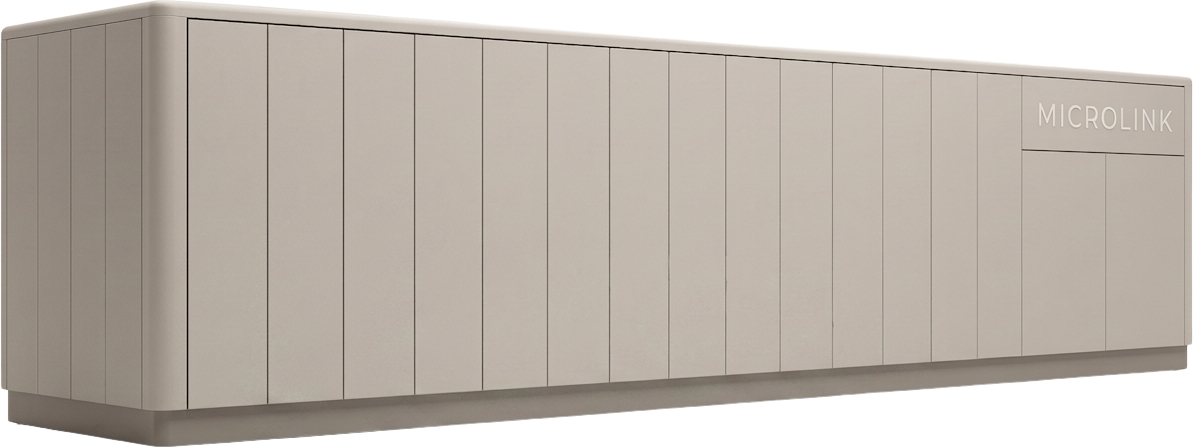
MicroLink pod
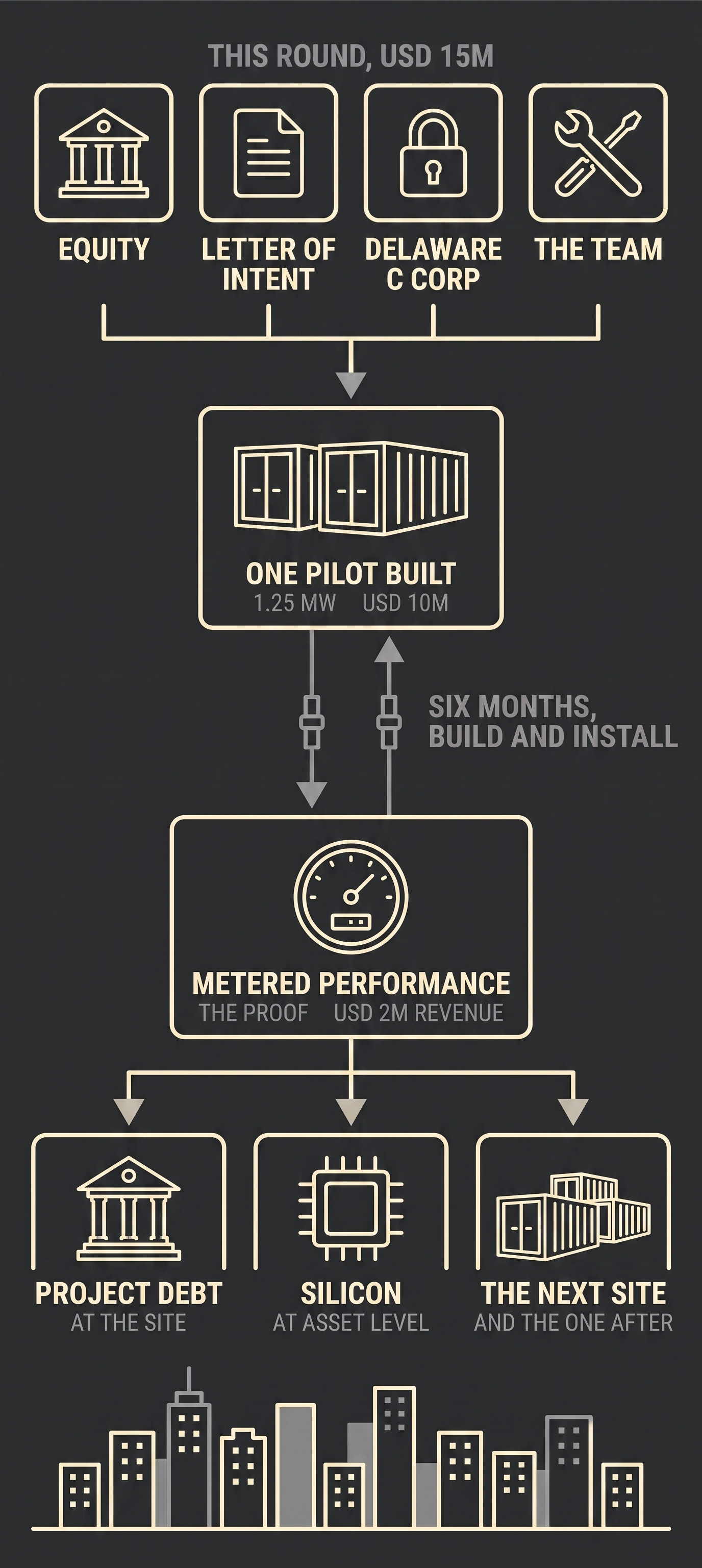
This round of USD 15M into one pilot built at 1.25 MW for USD 10M, six months to build and install, metered performance at USD 2M of revenue, then project debt at the site and the next site

What you are subscribing into

The Company

A round is a bet on the entity as much as on the unit economics. The thing that goes wrong at this stage is not the model being wrong, it is the company being unable to execute it: a team that cannot build what it drew, intellectual property sitting in the wrong entity, or a structure where one site failing takes the rest down with it. Each of those is answered below before the money moves rather than after.

Entity:Delaware C corpThis round subscribes here. Sites sit below it in their own vehicles

01

The team and the hires

  • The design set exists already, meaning the basis of design, the design basis register and the canonical figures workbook were produced by the current team rather than promised by a future one
  • Eight people over two years is what the round funds, weighted to engineering and site development rather than to sales
  • The engineering entity is separate, a South African Pty Ltd carrying development capability, so the cost base is not a single market cost base
  • The team document is not written yet, and that is stated plainly rather than papered over with a slide of headshots
Hires:Eight, two yearsFunded out of the round alongside the pilot, including working capital

02

The moat

  • The defensible thing is the interface, not the container: a repeatable partner boundary that a host partner will sign, and the record behind it
  • Intellectual property sits in an Ireland IPCo and is licensed into the operating entities, so it survives any single project vehicle
  • The connector plate and the boundary design are being developed as in house design and as filed intellectual property rather than as a supplier specification
  • What a hyperscaler or a Vertiv can copy is the hardware. What takes longer is a signed host partner boundary and a metered reuse record on a standard
Cross default:NoneOne SPV per site, so no site cross collateralises another

03

The structure

  • Company equity at the top, in the Delaware C corp. That is where this round lands and where dilution is measured
  • One SPV per site, holding the licence to occupy, the thermal supply agreement and the project debt, so a failed site is contained inside its own vehicle
  • The edge estate sits in its own SPV with its own management, so a different risk profile does not sit inside the pod programme
  • Project debt is raised at the site, inside the vehicle that holds the capacity lease, so fleet growth does not come back to company equity

If the structure is wrong, it is wrong before the first pod rather than at the third. That is why it is drawn here rather than described in a data room note.

The sequence
Money and Milestones

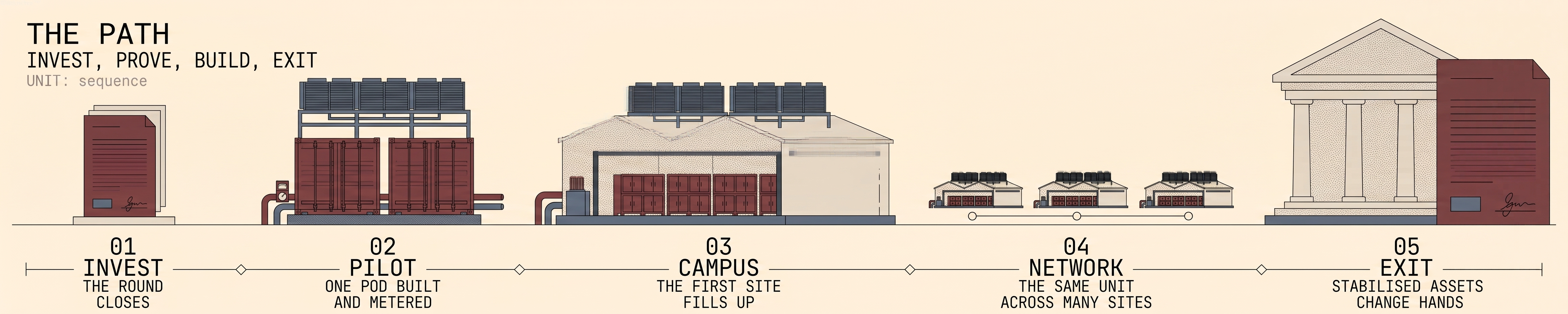
The path: invest, pilot, campus, network, exit

01

What the Money Does

Ten million of the fifteen is one pod on the ground, built and installed inside six months, and metered at the end of it. The rest funds the eight people who build it and the bench behind the design set. Nothing is held back for a second site, because the second site is financed against the first one's meter rather than against this equity.
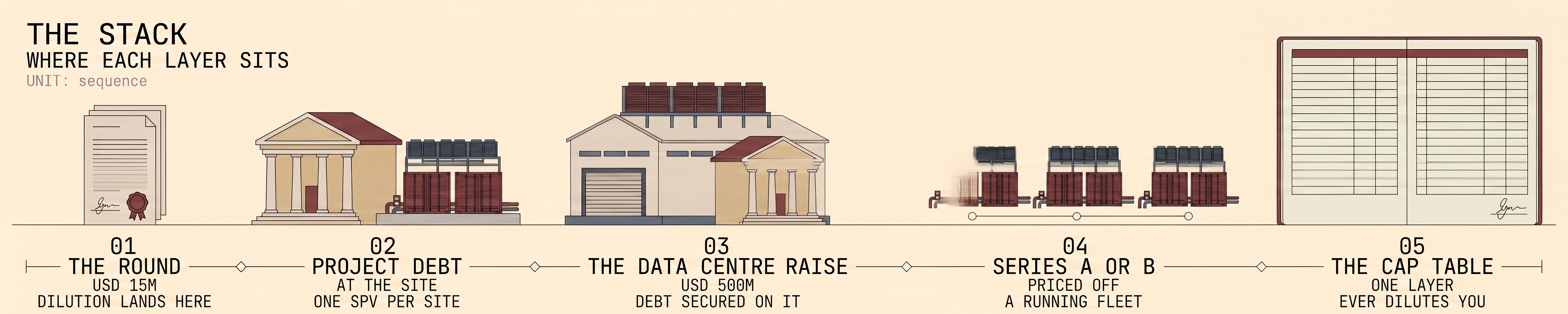
The stack: the round at USD 15M where dilution lands, project debt at the site with one SPV per site, the data centre raise at USD 500M, a Series A or B priced off a running fleet, and the cap table where one layer ever dilutes you

02

Dilution and the Next Round

Dilution is measured at the Delaware C corp and nowhere else. Project debt is raised inside each site vehicle against the capacity lease, so fleet growth is financed at the site rather than by issuing company equity. The pilot round is the only capital raised against a model. The data centre raise that follows is priced against a meter.
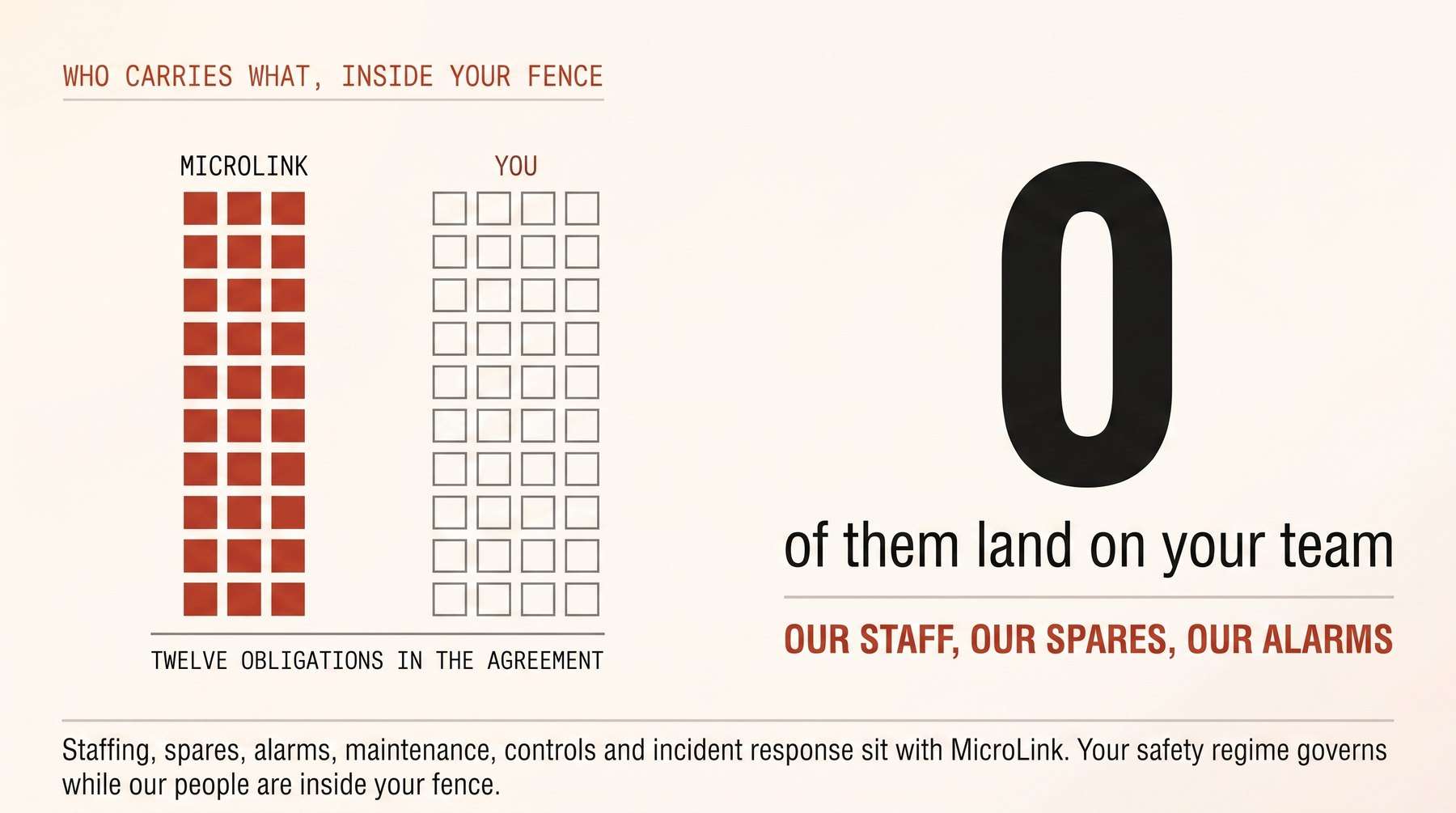
Who carries what, twelve obligations

03

What Kills This

Three things, each with a number rather than a reassurance. Build cost landing at the Tier III figure rather than the derived one takes stabilised yield from 19.4 percent to 13.6 percent. No host payment benchmark existing means the largest commercial term is unpriced when the first thermal supply agreement is drafted. A first customer that does not sign leaves a built pod with nothing for project debt to attach to.
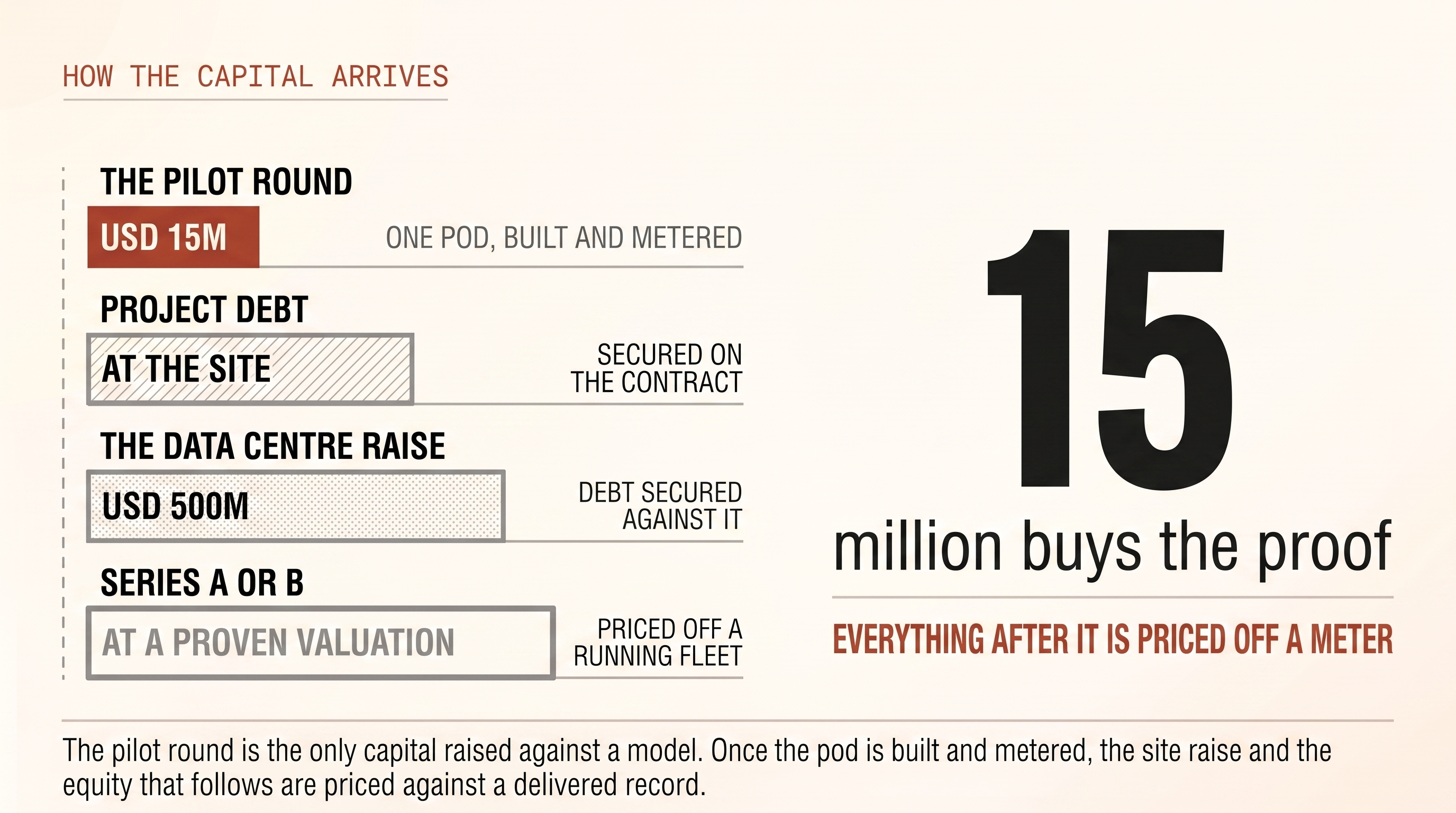
How the capital arrives: the pilot round at USD 15M, project debt at the site, the data centre raise at USD 500M, then a Series A or B at a proven valuation

04

The Exit

Stabilised infrastructure on a fifteen year lease with a fixed escalator trades on a yield basis. Yield on cost 19.4 percent against an exit basis of 6.25 percent, a spread above 1 000 bps, and a levered IRR of 42.7 percent.

Next Steps

Open the model first

Contact